
Agilysys
PMS, POS, Design System
Sr Director Design, Chennai.
-
Led a global team of 30+ designers, driving the design strategy and vision for a suite of 20 hospitality enterprise and consumer applications.
-
Simplify complex resort operations and elevate guest experiences through intuitive solutions for booking, loyalty, dining, and payments.
-
Establish scalable design systems to ensure consistency and accelerate product delivery across the entire application suite.
-
Collaborate with cross-functional leaders to translate business needs into human-centered designs that serve as a key industry differentiator.

POS – UI Modernization & Split Check
Agilysys InfoGenesis POS Terminal
Agilysys InfoGenesis is an enterprise-grade hospitality POS platform designed to manage ordering, payments, menu management, and service operations across restaurants, hotels, resorts, casinos, and other high-volume venues. The fixed POS terminal gives staff a reliable interface to quickly take orders, manage checks, process payments, and route orders to the kitchen.
InfoGenesis Tablet POS / IG Flex
IG Flex extends the full functionality of InfoGenesis POS to a mobile tablet, enabling staff to take orders and accept payments anywhere—at the table, poolside, or across large hospitality venues. The tablet can also function as a fixed terminal when docked, providing flexibility between stationary and mobile service.
Project Goal
The goal of the project was to modernize the legacy Agilysys InfoGenesis POS experience while preserving the speed and reliability required in high-volume hospitality environments.
The redesign aimed to:
-
Simplify complex food ordering and cheque-splitting workflows.
-
Make it faster and easier for servers to assign items to individual guests.
-
Improve accuracy when splitting bills across guests and tables.
-
Reduce cognitive load, errors, and unnecessary interactions.
-
Introduce new functionality without increasing interface complexity.
-
Create a scalable and consistent UI foundation for future InfoGenesis features.
-
Improve overall task efficiency, learnability, discoverability, and user confidence.


-
AI-Assisted UX Analysis: Used AI to analyze complex POS workflows and identify opportunities to simplify ordering, check management, and split-check interactions.
-
Rapid Design Exploration: Leveraged AI-powered design tools to quickly generate and compare multiple UI concepts and interaction patterns.
-
Workflow Prototyping: Used AI-assisted prototyping to explore end-to-end split-check flows, validate interactions, and iterate faster.
-
Design Quality: Combined AI-driven exploration with hospitality domain knowledge to reduce cognitive load, minimize errors, and create faster, more intuitive POS experiences.
Split Check by Table and Person
-
Item-Level Splitting: Dynamically split individual menu items or share a single item's cost across multiple split checks or seats.
-
Visual Check Management: Utilize an intuitive, resizable split-check interface to drag, drop, and reorganize items into separate linked orders.
-
Mobile & Fixed Support: Perform split-check operations seamlessly on fixed countertop terminals or mobile hardware (such as IG Flex tablets and handheld devices).
-
Payment Flexibility: Divide bills among multiple distinct payment methods, custom tips, or post charges directly to a guest's hotel folio

Design Approach
1. User & Client Research
Conducted research with Agilysys clients and POS users to identify workflow pain points, especially item-to-guest assignment and cheque splitting. Mapped usability issues, navigation challenges, and opportunities to reduce steps, errors, and cognitive load.
2. Competitive & Comparative Analysis
Benchmarked hospitality POS solutions including Toast, Shiji Group, and Infor across ordering, guest assignment, cheque splitting, and payments. Identified interaction patterns, UX gaps, and opportunities to improve InfoGenesis while maintaining high-volume service speed.
3. UX Concepts & Interaction Design
Explored multiple concepts to simplify information hierarchy, navigation, visual grouping, and contextual actions.
Integrated new capabilities while preserving the speed and reliability required in high-volume hospitality environments.
4. Usability Testing & Validation
Tested interactive prototypes with representative users across realistic ordering and cheque-management scenarios.
Measured task efficiency, errors, learnability, discoverability, and confidence to validate the interaction model.
5. Iteration & Design Refinement
Applied testing insights to refine workflows, terminology, layouts, feedback states, and interaction patterns.
Iteratively improved the experience to make POS tasks more predictable, efficient, and intuitive for new and experienced users.
Key UX Improvements Tracked
-
Task efficiency: Reduce the time and number of interactions required to place and manage orders.
-
Accuracy: Improve assignment of food items to individual guests and reduce cheque-splitting errors.
-
Cognitive load: Simplify complex POS workflows and make critical information easier to understand.
-
Information hierarchy: Clearly prioritize guest, item, order, cheque, and payment information.
-
Discoverability: Make frequently used functions easier to find without adding visual clutter.
-
Consistency: Establish consistent interaction patterns, terminology, controls, and feedback across workflows.
-
Error prevention & recovery: Design interactions that prevent incorrect item assignments and make corrections easy.
-
Learnability: Enable new staff to understand and perform common tasks with minimal training.
-
Scalability: Create a flexible UI framework that can accommodate additional POS functions and hospitality use cases.
-
Accessibility: Improve readability, touch-target sizing, contrast, and usability in demanding operational environments.
Outcome
The redesigned experience created a faster, clearer, and more reliable POS workflow. It improved ordering speed, reduced interaction complexity, and increased accuracy when assigning food items and splitting cheques by guest/table, while providing a more modern and scalable foundation for the InfoGenesis POS experience.
OnDemand - Guest food ordering App
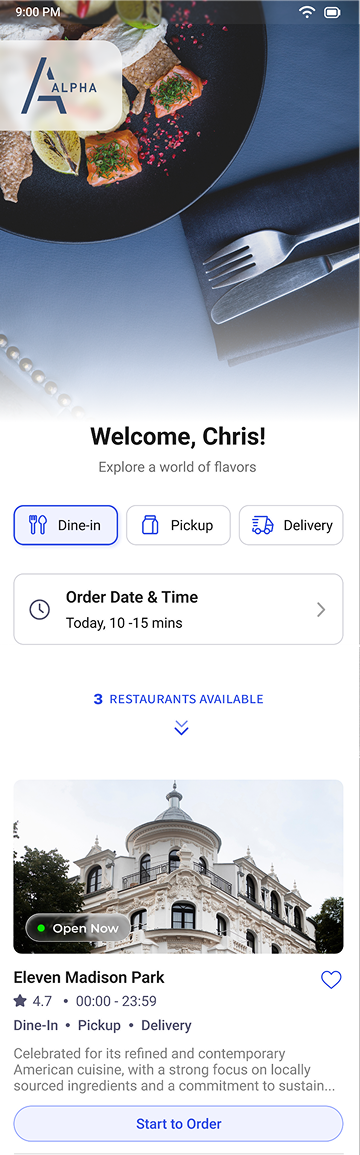
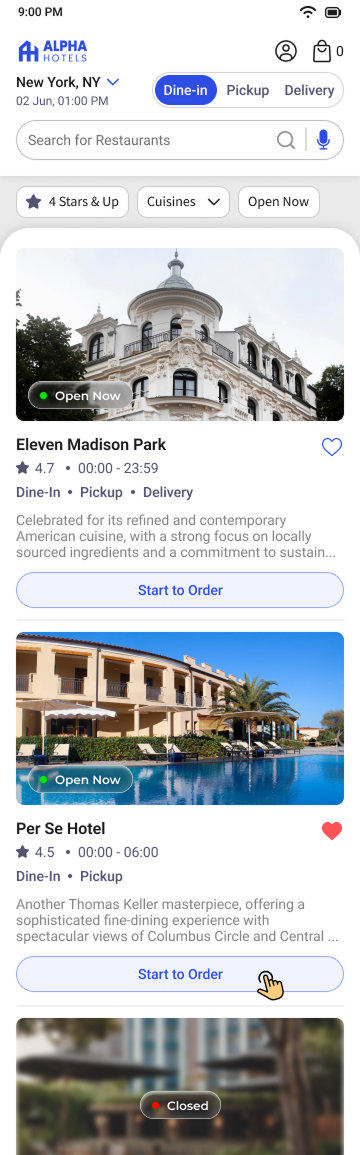
Agilysys food and beverage mobile ordering—integrated through the Agilysys Guest App and powered by IG OnDemand—is designed to give guests complete control over their dining experience across hospitality properties
Key Features
-
Multi-Venue Property Ordering: Guests can browse dynamic digital menus and place orders from multiple property outlets (e.g., fine dining, quick-service cafes, poolside bars, or room service) directly within the app.
-
Location-Based Delivery & Pickup: The system uses table numbers, pool cabana tags, guest room numbers, or location-specific QR codes to route orders accurately.
-
Real-Time Order Tracking: Direct integration with InfoGenesis POS and the Kitchen Display System (KDS) gives guests accurate preparation times and status updates.
-
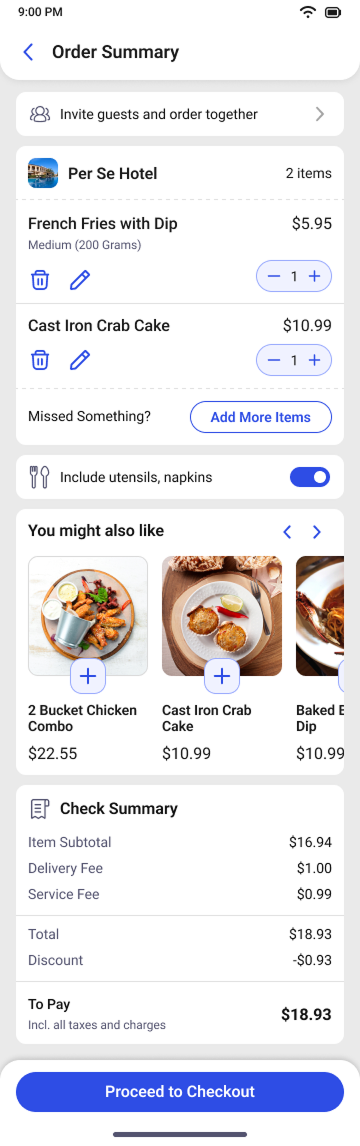
Contactless & Secure Payments: Supports room charges (folio integration via PMS), digital wallets, and credit cards via Agilysys Pay with PCI-validated encryption and mobile tipping.
-
Continuous Table Ordering: In full-service restaurant settings, multiple guests at the same table can order rounds of drinks or add dishes throughout their meal
The Agilysys food ordering ecosystem achieves superior design and value by moving away from fragmented, third-party software and using a single, unified data core
Design Improvements
-
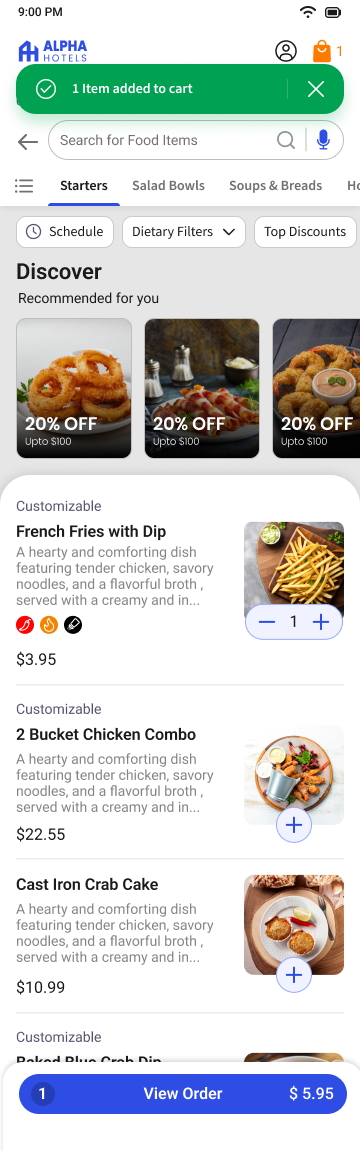
Turned Chaos into Clarity: I structured a visual hierarchy for complex menu modifiers (allergens, substitutions, and preferences). This layout dramatically reduced ordering errors and simplified what is traditionally a text-heavy, overwhelming choice process into a few intuitive taps.
-
Minimized Checkout Drop-off: By designing a checkout flow that deeply integrates property management systems, I allowed guests to charge items securely to their room folio or use digital wallets in a streamlined, two-tap process, vastly improving conversion rates.
-
Replaced Uncertainty with Transparency: I designed real-time micro-interactions and status bars connected straight to the kitchen display systems. This visual feedback loops out the anxiety of waiting, giving guests total peace of mind while they enjoy their stay.
-
Designed for Personalization at Scale: I designed smart, non-intrusive recommendation modules powered by guest loyalty data, surface-leveling past favorites and tailored upsells without cluttering the screen or disrupting the primary user flow.
Design System - Unity, Unified Design Project
My Role
As a design leader, I am spearheading the creation of a unified enterprise design system to transform the Agilysys product suite from a siloed portfolio into a cohesive, scalable SaaS ecosystem. Currently, our applications suffer from fragmented visual languages and inconsistent interaction patterns for identical user tasks. By establishing a single source of truth, my team is eliminating design debt, accelerating engineering velocity, and introducing a fully white-labeled architecture that enables true brand customization for our global hospitality clients.
Fragmented Agilysy Design System
- All products look and behave differently

Strategic Pillars & Impact
-
Harmonizing the Visual Language: I am aligning our disparate product teams under a single, modern visual language. This ensures that whether a user interacts with our PMS, POS, or Mobile Guest Apps, the typography, iconography, and spatial grid feel intentional, authoritative, and unmistakably part of the same premium ecosystem.
-
Consolidating Interaction Patterns: To dramatically lower the user's cognitive load, I am audits-driven, standardizing interaction models for identical tasks—such as filtering data, checkout flows, and search. Replacing conflicting patterns with universal, intuitive behaviors creates a predictable user experience across all touchpoints.
-
Architecting True White-Labeled SaaS: A core requirement of this system is high-efficiency customization. I am designing a tokenized architecture (using Design Tokens) that separates core structural layouts from the surface layer. This allows our products to act as true white-labeled solutions, enabling clients to effortlessly inject their own logos, colors, and typography to fit their brand identity perfectly.
-
Driving Scale Through Reusable Components: By engineering a robust library of reusable UI elements and composable patterns, my team is bridging the gap between design and development. This shared component library dramatically reduces redundant code, minimizes design drift, and slashes the time-to-market for new features.
Design Approach


Leadership & Cultural Impact
Breaking Down Product Silos: Beyond the technical artifacts, I am driving a cultural shift toward cross-functional alignment. I mentor and guide our product, design, and engineering teams to champion standard design system practices, transforming how we build products at scale.